
Biomarker research
Brain imaging and mental illness (Iseult 3)
- Period
- 2026 > 2028
- Research area
- Biomarkers
A clinical research project to study the brains of people living with psychiatric disorders using the world’s most powerful MRI scanner: ISEULT.
Donate to this project
This project is only partly funded today. With your gifts, precision psychiatry can move the cure of mental illness forward. Individual or company, every contribution counts: together, let’s make this hope a reality.
The challenge
- There is currently no validated biomarker for psychiatric disorders such as schizophrenia and bipolar disorders, nor for autism spectrum disorders.
- Brain MRI studies have revealed atypical features in patients’ brains, but the measured effect remains too small to support diagnosis or to determine the optimal treatment.
- Over the past 20 years, psychiatrists and researchers have considerably increased the size of the samples studied, but this does not seem to be enough to discover biomarkers with conventional brain MRI.
- The discovery of brain MRI biomarkers could help in the diagnosis of psychiatric disorders and lead to new treatments, but also change society’s view so that mental illnesses are seen as illnesses like any other.
Our strengths
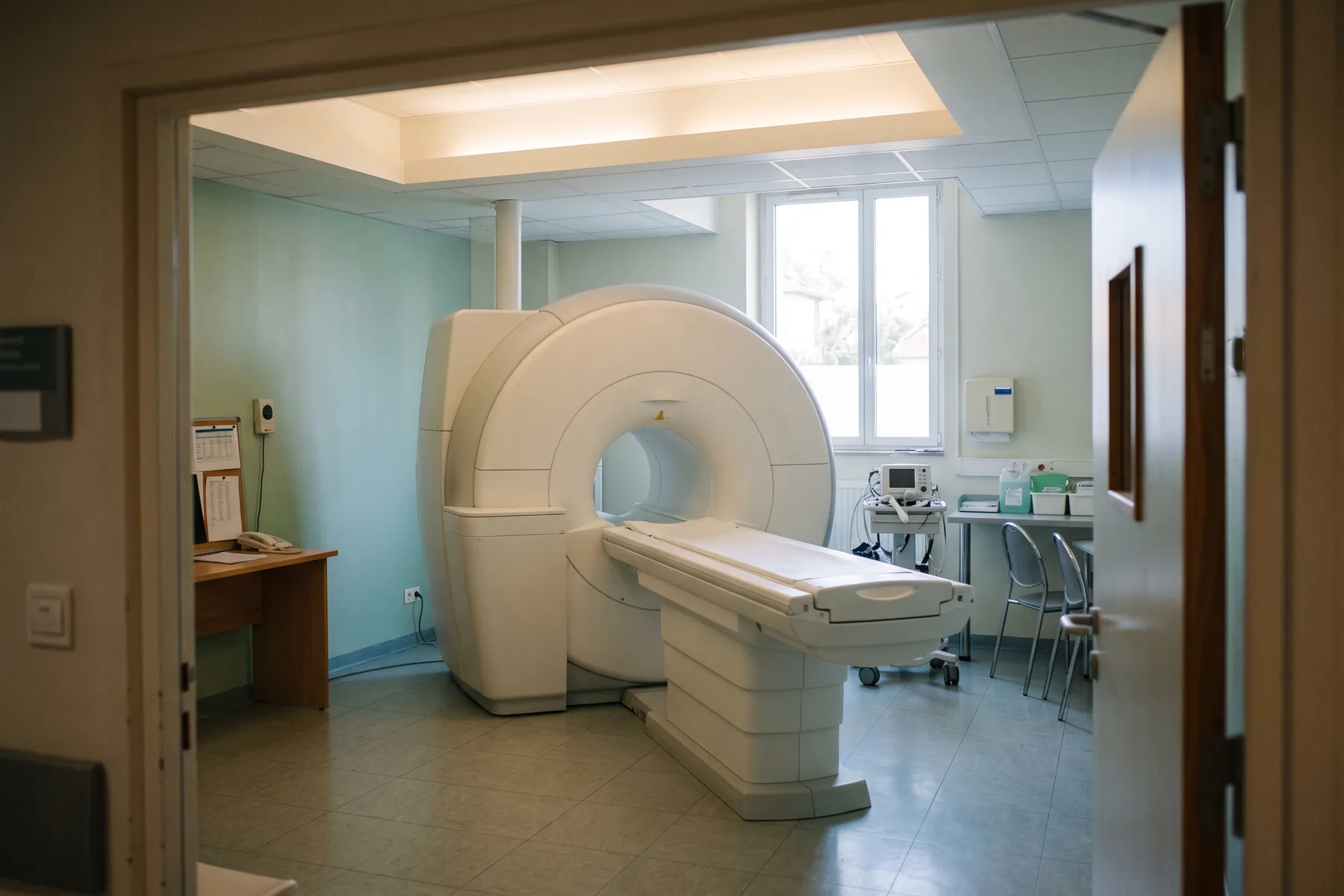
- In 2024, after more than 20 years of research in partnership with Germany, France acquired ISEULT, the world’s most powerful MRI scanner, located at the NeuroSpin laboratory (CEA Saclay).
- Whereas the magnetic field of conventional MRI scanners is around 3 Tesla, ISEULT can produce images of the brain at 11.7 Tesla, with an unrivalled resolution of around a tenth of a millimetre.
- This resolution, together with the quality of the MRI signal, makes it possible to study the brain in action, at the same scale as a microscope.
- This project is a collaboration between Pauline Favre, an INSERM researcher, Dr Charles Laïdi, an academic psychiatrist, and Nicolas Boulant, a physicist and scientific lead of the 11.7 tesla MRI scanner, all three of whom work at NeuroSpin.
- With the ISEULT MRI scanner, their ambition is to discover new biomarkers of psychiatric disorders and to make the images acquired available to the scientific community.
Objectives
- This research project aims to acquire ultra-high-resolution MRI scans in a cohort of 40 people — living with schizophrenia or bipolar disorder, or autistic — as well as control participants.
- We will carry out structural MRI (to study the density of the cerebral cortex) and functional MRI (to visualise the brain in action) for each participant, for one hour.
- The images will be published on OpenNeuro, a platform used by scientists around the world, which will allow our team, and any interested researcher, to study the anonymised brain MRI scans of the patients and control participants.
Project leaders

Pauline Favre
PhD, neuroscience researcher, INSERM, NeuroSpin – CEA Saclay
Dr Charles Laïdi
MD, PhD, university hospital practitioner, Henri-Mondor University Hospital, Créteil
Become a sponsor of the project
By funding this project, you make concrete progress possible for the people affected and those close to them.
- Your contribution will be proof of your commitment, which you can highlight in internal and external communication and for your employer brand.
- Fondation FondaMental will acknowledge your support on all its communication materials and in all its publications, in France and internationally. Our team also offers information meetings for your employees, your clients and, more broadly, all your stakeholders.
- Added to this is the tax advantage provided for this type of sponsorship, which Fondation FondaMental, given its status, can offer you.
- These counterparts are proposals and can be added to.
News, podcasts and conferences on this subject
Research and studies
Other projects to support
Biomarker research
Immunology and mental illness
Immunopsychiatry is a new window on the neurobiology of major psychiatric disorders: it sheds light on the mechanisms behind them and makes it possible to identify and develop innovative preventive or curative treatments. Each project has its own page: autoimmune psychoses, the HERV-W retrovirus, metabolic psychiatry, the gut-brain axis, proteomics, interleukin-2 and photobiomodulation.
Research area · Biomarkers
See the projectBiomarker research
Genetics and mental illness
Analysing the genetic markers of the patient cohorts assembled over fifteen years across the Expert Centre network, to better understand the mechanisms of mental illness and open the way to genetic diagnosis, as has been done in oncology.
Research area · Biomarkers
See the projectBiomarker research
Environmental risk factors and mental illness (PolluPsy)
A case-control study to determine whether exposure to air pollution — over the whole life, then during the periods of neurodevelopment — increases the risk of schizophrenia, bipolar disorder or autism spectrum disorder.
Research area · Pollution and climate
See the project
Become a donor